

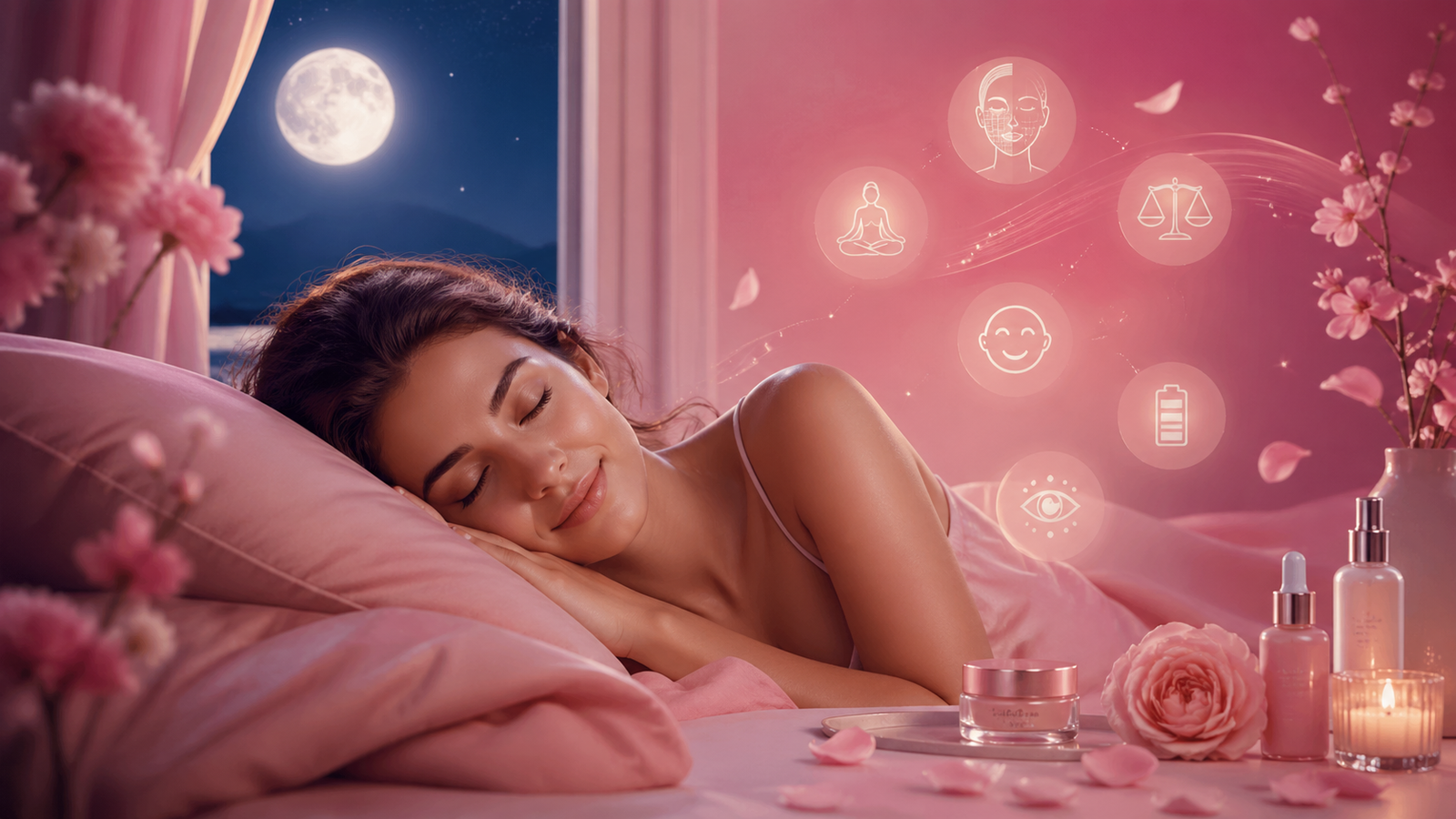
Sleep and Beauty: How Rest Affects Skin, Cortisol, Puffiness, Mood and Energy
Sleep and beauty are deeply connected. When your sleep improves, your beauty improves from within. This powerful relationship between sleep and beauty influences your skin, cortisol levels, puffiness, mood and overall energy. The quality of your rest influences how your skin repairs, how your cortisol levels behave, how puffy your face looks in the morning, how balanced your mood feels, and how much natural energy you carry through the day.
Table of Contents
Understanding the connection between sleep and beauty helps you unlock natural glow, balanced hormones and long-term skin health.
Many people invest in cleansers, serums, moisturizers, supplements and beauty treatments, but still overlook one of the strongest natural beauty tools: consistent restorative sleep. True beauty is not only built on what you apply externally. It is also shaped by how well your body restores itself internally.
When sleep is poor, the body may struggle with inflammation, increased stress hormones, weaker skin barrier recovery, under-eye swelling, cravings, emotional imbalance and low morning energy. Over time, this can make the face appear dull, tired, irritated and older than it really is.
When sleep improves, your body gets more opportunity to repair skin cells, balance hormones, calm the nervous system, regulate appetite signals, reduce visible fatigue and support a softer, fresher glow. This is why “beauty sleep” is not just a phrase. It is a real wellness principle.
Your night routine is not only about skincare. It is about creating the internal condition where your skin, hormones, mood and energy can repair together.
1. Why Sleep Is the Foundation of Natural Beauty
Sleep is the body’s nightly reset system. During quality rest, the body shifts into repair mode. Blood flow supports the skin, cellular recovery becomes more active, inflammation can settle, and the nervous system gets a chance to calm down after daily stress.
From a beauty perspective, this matters because your skin is a living organ. It responds to stress, hydration, hormones, food, sunlight, pollution and rest. If your sleep is consistently broken, late or too short, your skin often shows it before anything else.
Common signs of poor sleep may include dull skin, puffy eyes, dark circles, uneven tone, more visible lines, breakouts, dryness, sensitivity and a tired facial expression. These signs are not always solved by adding more products. Sometimes the missing step is better recovery.
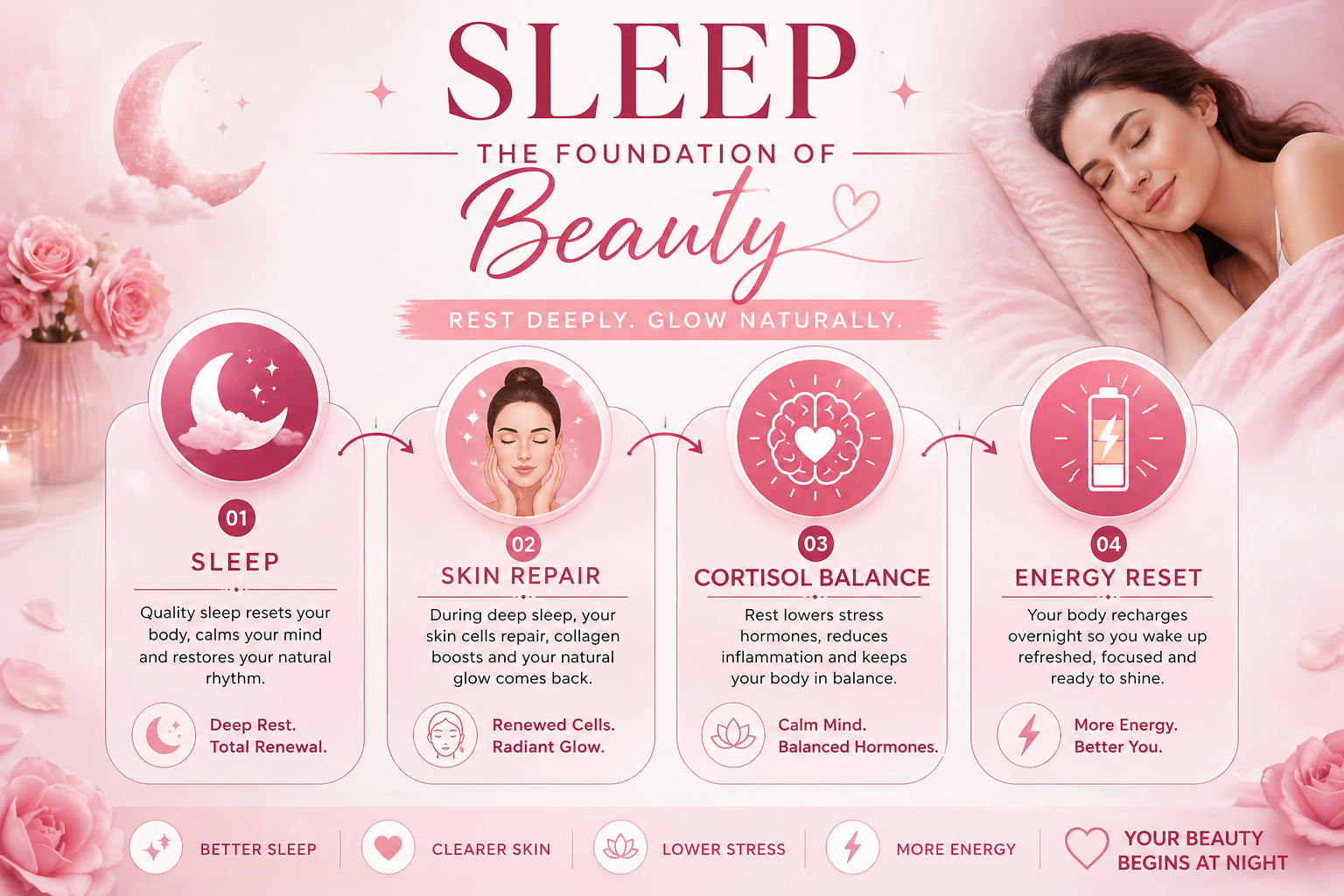
Scroll-Stopping Infographic Idea
Restores body systems
Repairs overnight
Calms with rest
Resets daily vitality
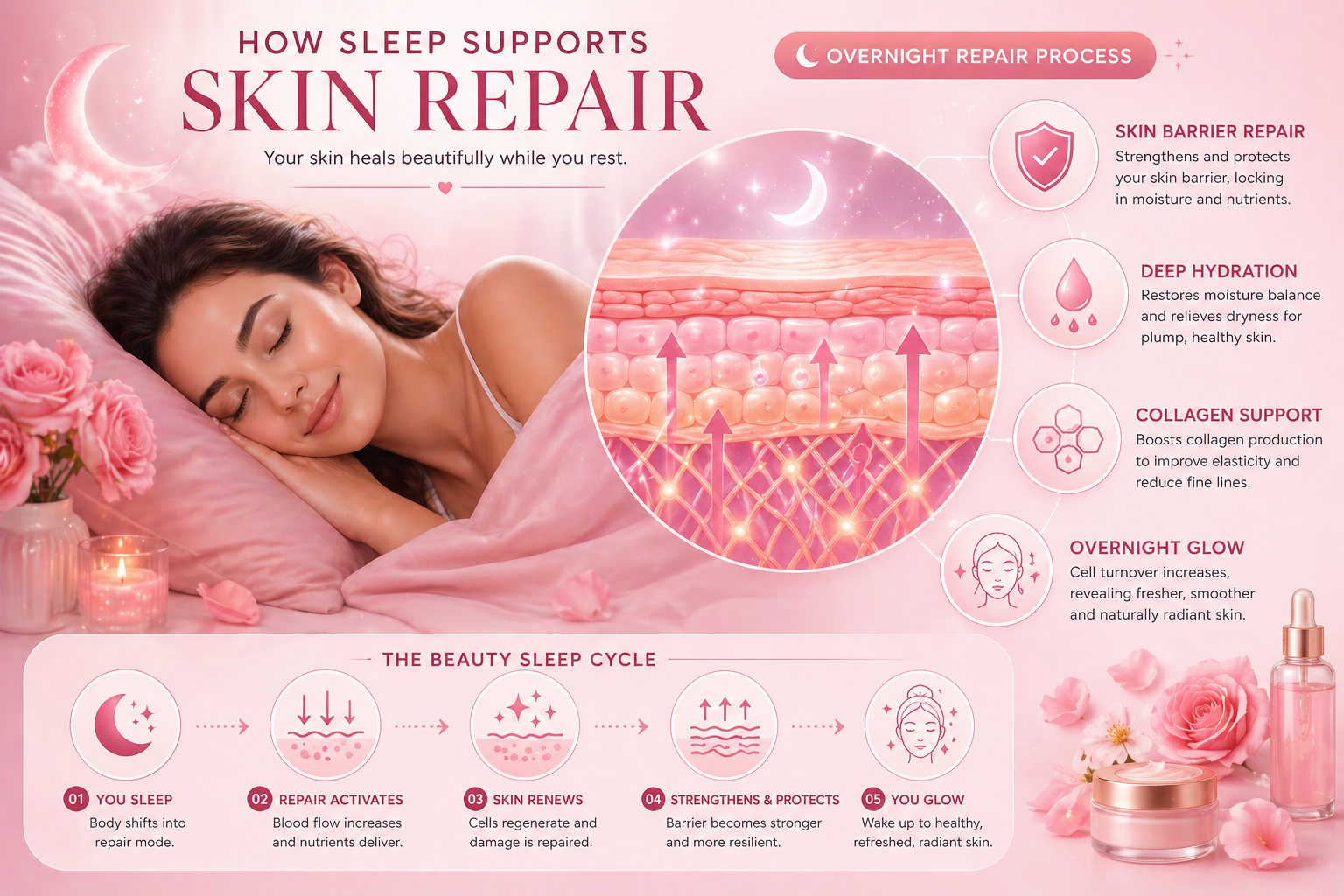
2. Sleep and Skin Repair: The Overnight Glow Effect
Your skin works hard during the day to defend itself against sunlight, pollution, sweat, makeup, temperature changes and environmental stress. At night, especially during deeper stages of sleep, your body gets more opportunity to repair and renew.
This is one reason why a good night of sleep can make the face look softer, brighter and more rested. Better sleep may support healthy circulation, skin barrier recovery, hydration balance and reduced visible tiredness.
Poor sleep can disturb this rhythm. When your rest is irregular, your skin may appear dehydrated, dull or more reactive. Products may not perform as well because the internal repair environment is not fully supported.
Good Sleep Supports
Skin renewal, barrier recovery, natural glow, calmer appearance and better moisture balance.
Poor Sleep May Trigger
Dullness, dryness, fine lines, redness, tired expression, puffiness and increased sensitivity.
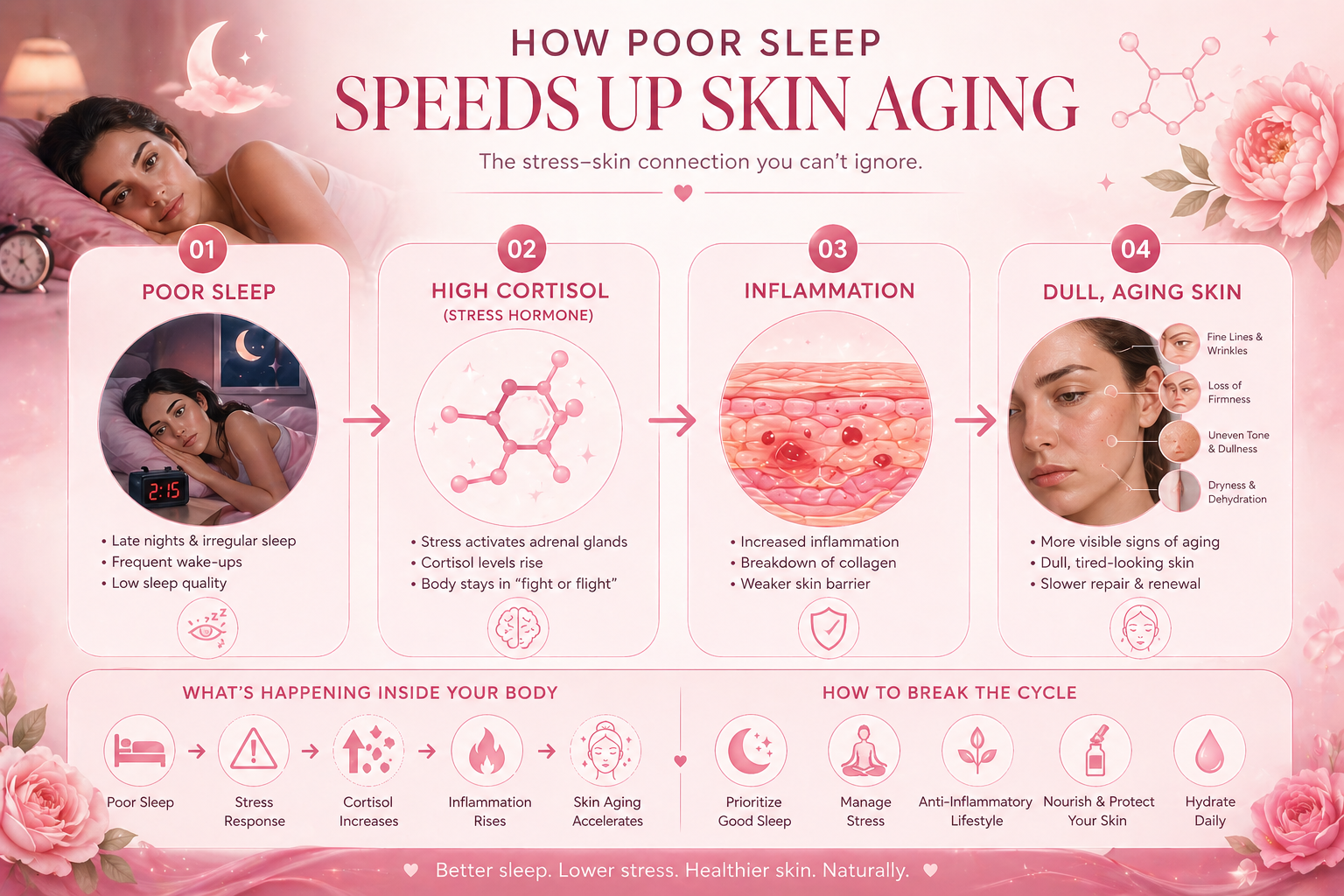
3. Cortisol, Stress and Aging: The Sleep Connection
Cortisol is often called the stress hormone. It is not bad by itself. Your body needs cortisol for normal energy, alertness and survival. The problem starts when cortisol stays elevated too often due to stress, poor sleep, late nights, overwork or an overstimulated nervous system.
When sleep is poor, the body may remain in a stress-like state. This can affect skin, mood, cravings and inflammation. In beauty terms, high stress and weak recovery may contribute to premature aging signs, breakouts, dullness and a less rested appearance.
Better sleep helps your body move away from constant alert mode and toward repair mode. This supports a calmer face, more balanced mood and more stable energy the next day.
Cortisol Beauty Chain
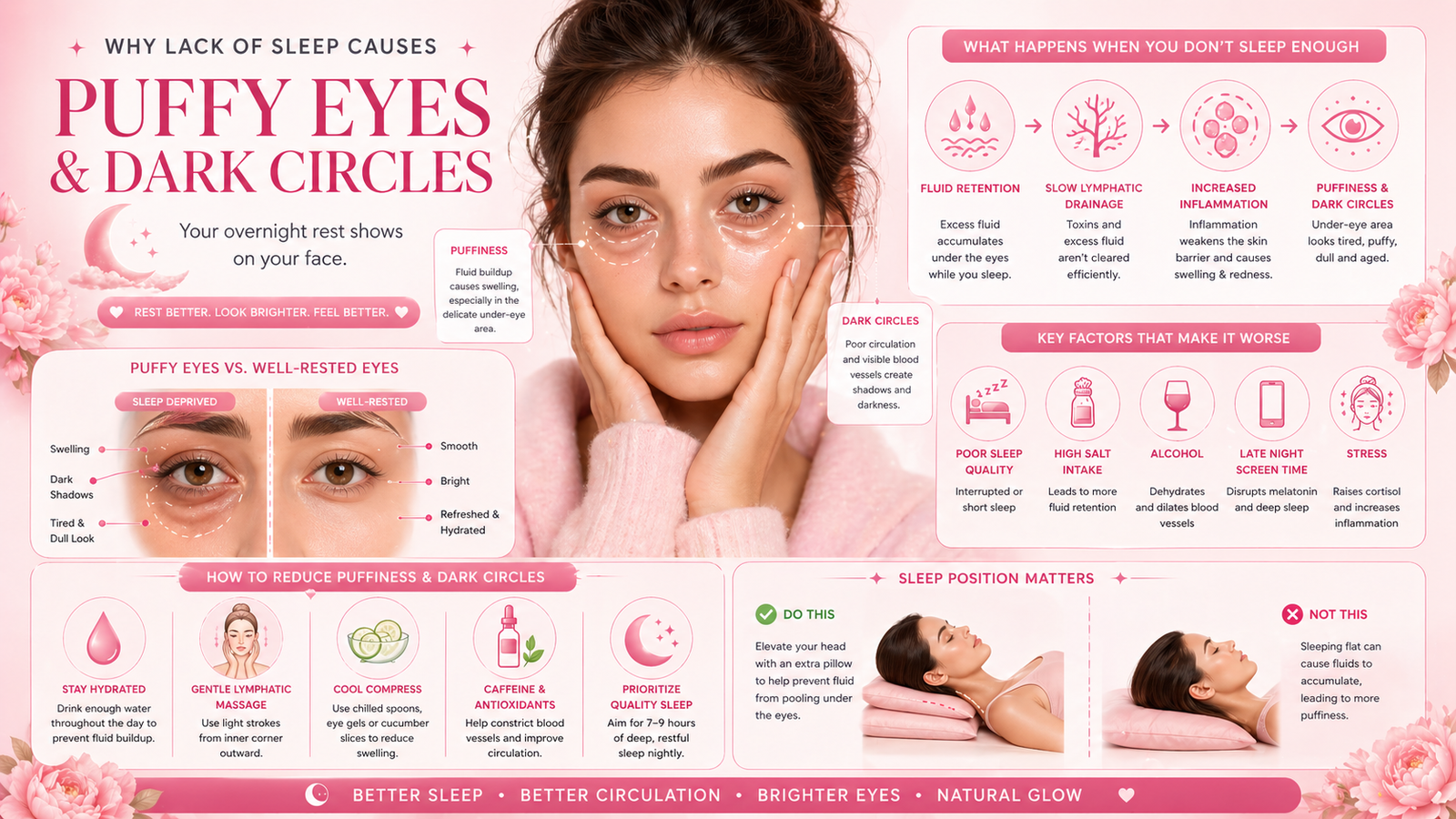
4. Puffiness, Dark Circles and Morning Face Swelling
Under-eye puffiness is one of the most visible signs of poor sleep. After a restless night, the face may look swollen, heavy or tired. This can happen because fluid balance, circulation and lymphatic drainage are influenced by rest, hydration, salt intake, stress and sleeping position.
Dark circles can also appear more noticeable when you are sleep-deprived. The skin around the eyes is delicate, and poor rest may make shadows, dull tone and tiredness more visible.
Good sleep does not erase every cause of puffiness, but it can help the face look fresher and less inflamed. A consistent night routine, hydration, reduced late-night salty foods and a slightly elevated pillow may support a smoother morning look.
Common Puffiness Triggers
Poor sleep, high salt dinner, dehydration, alcohol, stress, allergies, hormonal changes and late-night screen exposure.
Simple Beauty Fixes
Sleep earlier, elevate your pillow, hydrate, reduce salty snacks, use a cool compress and try gentle facial massage.
According to research from Sleep Foundation, quality sleep plays a critical role in overall health, skin repair and hormone balance.
Studies published by the National Heart, Lung, and Blood Institute highlight how sleep supports metabolism, energy and recovery processes.
5. Sleep, Mood and Emotional Glow
Beauty is not only about skin texture. Your mood affects your facial expression, posture, confidence and overall presence. When you are tired, your face may look tense, your eyes may appear dull, and your energy may feel flat.
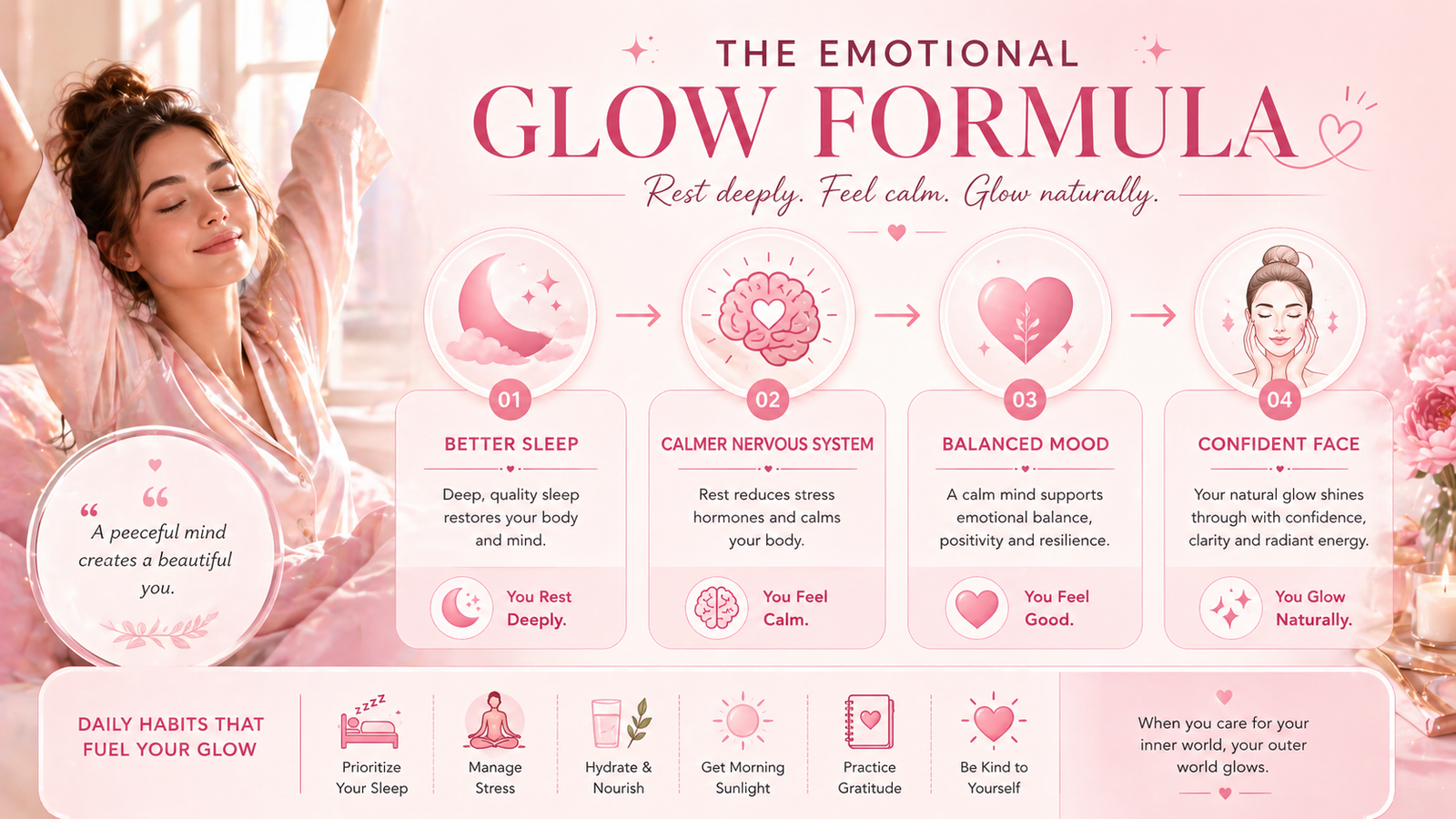
Sleep supports emotional regulation. After restful sleep, many people feel more patient, more optimistic and more capable of handling stress. This emotional balance creates what we can call the “emotional glow.”
When sleep is poor, mood swings, irritability, anxiety, cravings and low motivation can become more noticeable. This may also affect your self-care habits. You may skip skincare, eat more sugar, drink more caffeine or stay up even later.
The Emotional Glow Formula
Better sleep → calmer nervous system → balanced mood → softer facial expression → more natural confidence.
6. Sleep, Energy, Cravings and Metabolism
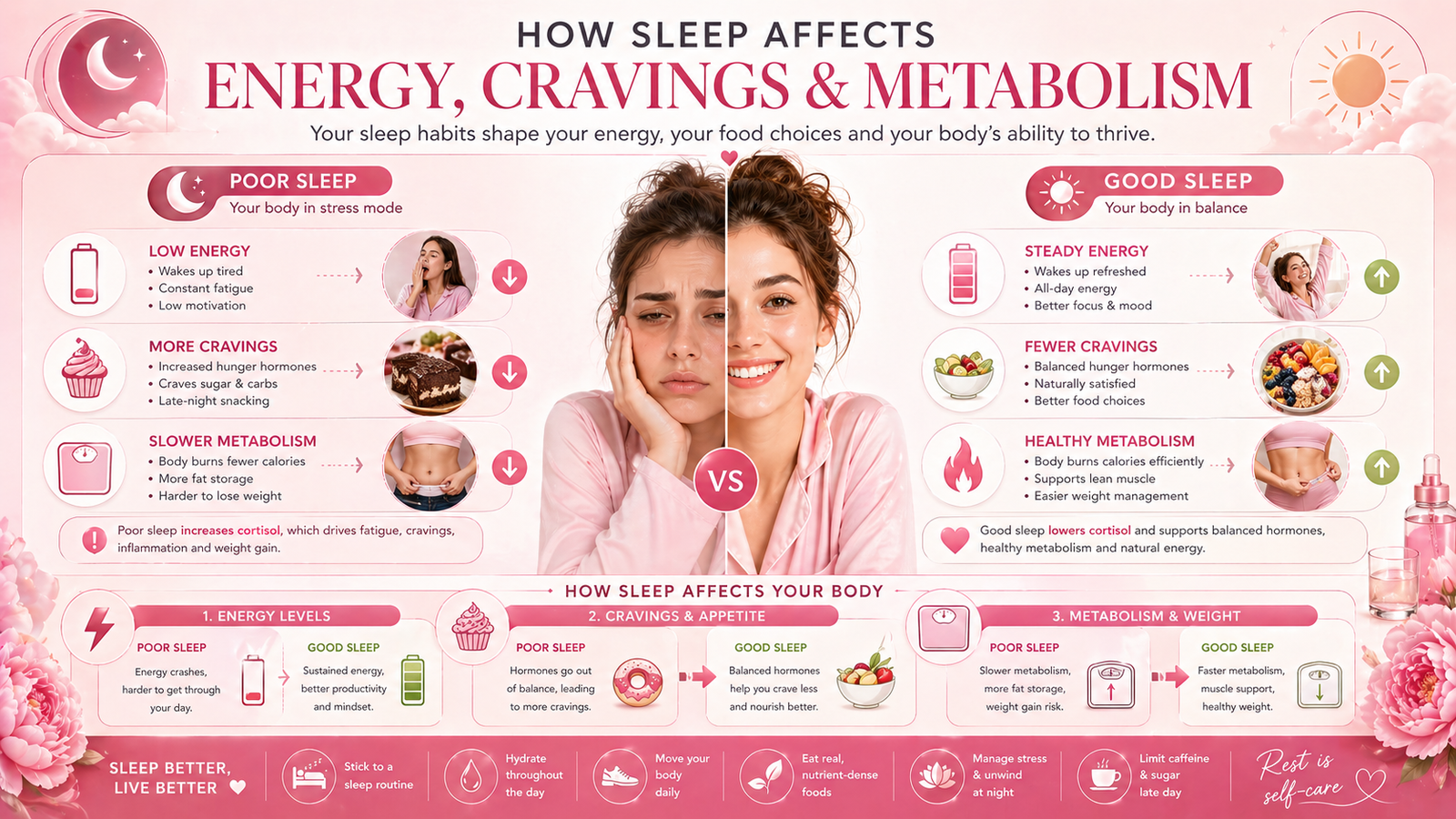
If you wake up tired, your entire wellness rhythm can shift. Poor sleep may increase cravings, reduce motivation to move, make workouts feel harder and increase the desire for quick energy from sugar or caffeine.
Sleep plays a role in hunger and satiety signals. When rest is poor, appetite regulation may become less balanced. This is why people often crave sweets, refined carbs or frequent snacks after a bad night.
From a beauty and wellness perspective, steady energy matters. When your body is rested, you are more likely to hydrate, choose nourishing foods, move your body, maintain skincare and feel emotionally stable.
More fatigue and cravings
Better energy stability
More consistent self-care
Balanced lifestyle choices
7. Sleep Cycles: When Beauty Repair Happens
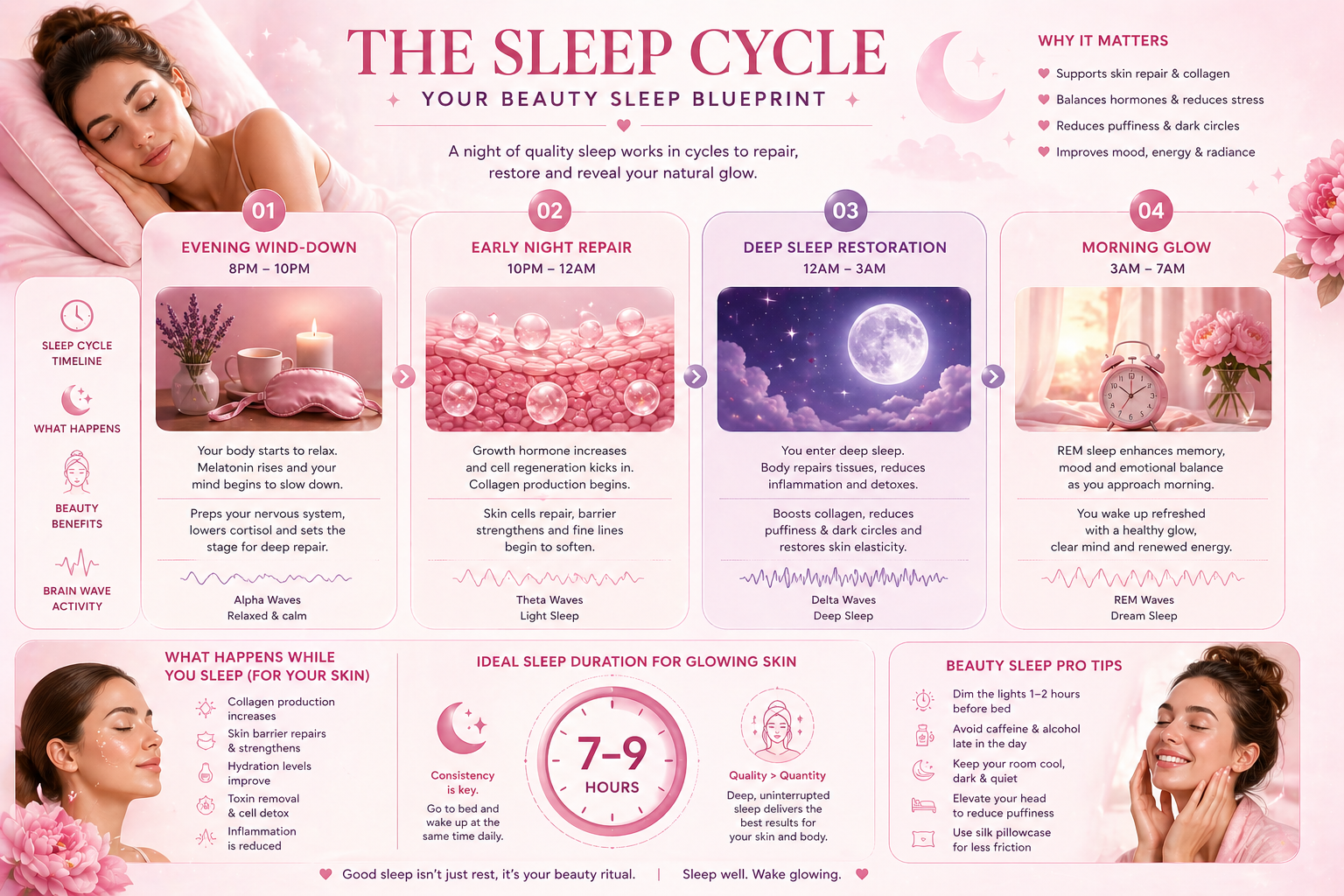
Sleep is not one flat state. Your body moves through different stages, including light sleep, deep sleep and REM sleep. Each stage supports a different type of recovery.
Deep sleep is especially important for physical restoration. REM sleep supports memory, emotional processing and mental balance. Together, these stages influence how refreshed you look and feel in the morning.
A common mistake is focusing only on the number of hours. Seven to nine hours is often recommended for adults, but quality matters too. Fragmented sleep, late-night scrolling, heavy meals and stress can reduce how restorative your sleep feels.
Beauty Sleep Timeline
Wind down nervous system
Physical repair begins
Restoration becomes stronger
Freshness and energy return
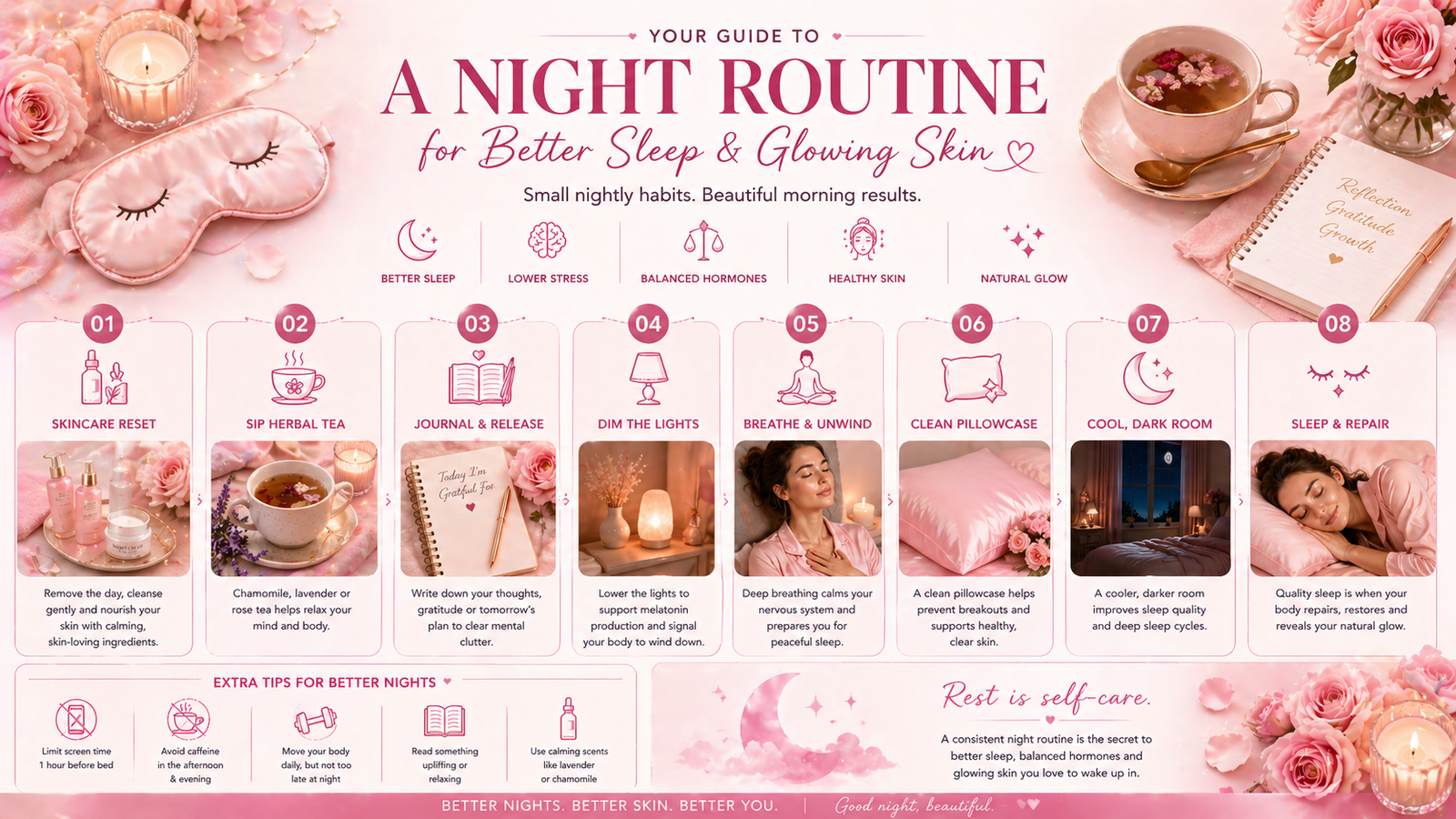
8. The SmartWellnessBeauty Night Routine for Better Sleep and Better Skin
A strong beauty sleep routine does not need to be complicated. The goal is to signal safety, calm and consistency to your body. When your nervous system feels relaxed, sleep quality can improve.
Start by creating a repeatable evening ritual. Dim the lights, reduce screen exposure, complete your skincare slowly, prepare your room and avoid overstimulating content before bed. These small steps train your body to transition into rest mode.
Step 1: Skin Reset
Cleanse gently, apply hydrating serum and seal with moisturizer.
Step 2: Nervous System Calm
Use soft lighting, light stretching, deep breathing or meditation.
Step 3: Sleep Environment
Keep the room cool, quiet, dark and free from harsh light.
Step 4: Morning Glow
Hydrate, get daylight, stretch and avoid rushing into stress mode.
Helpful Picks to Support Your Sleep, Skin & Energy Routine
Explore related SmartWellnessBeauty reviews for sleep support, skin recovery and metabolism wellness.
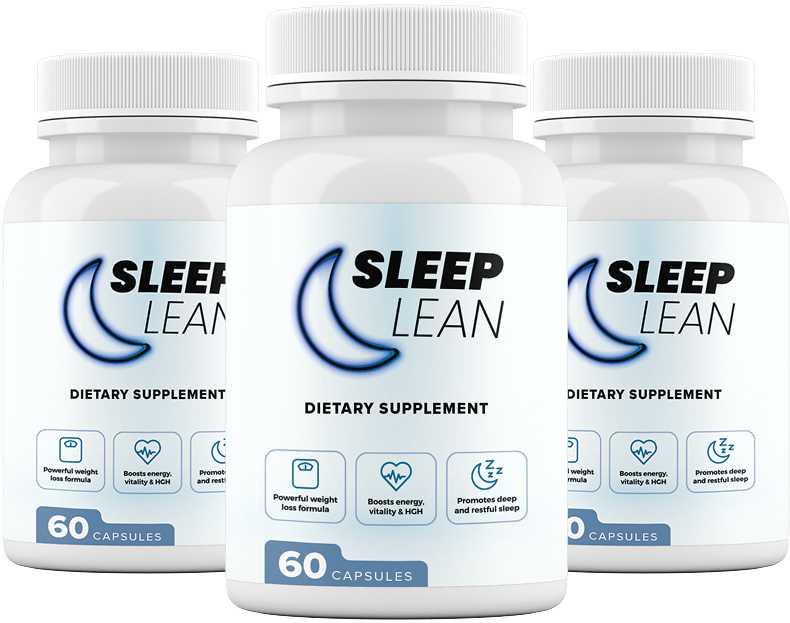
SleepLean Review
Explore how SleepLean is positioned for nighttime wellness, sleep support and body balance.
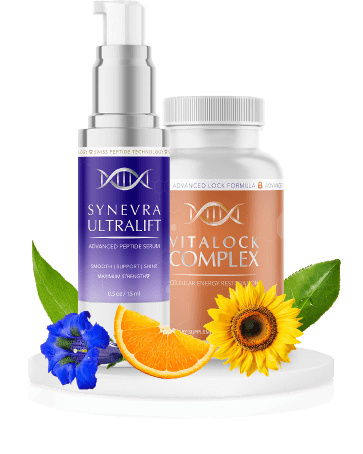
Synevra UltraLift Review
See how this skin firming serum may fit into a nighttime skincare routine.

AquaBurn Review
Discover AquaBurn for hydration-focused wellness and metabolism support.
Disclosure: Some links may be affiliate links. SmartWellnessBeauty may earn a commission if you purchase through these links, at no extra cost to you.
Freebie CTA Block
Download your free Sleep & Beauty Night Routine Checklist to build a calming evening ritual that supports glowing skin, balanced mood and better morning energy.
Get the Free Sleep & Beauty Checklist9. 15 Practical Tips to Improve Beauty Sleep
The secret to long-lasting glow is not just skincare—it is mastering the connection between sleep and beauty every single night.
10. FAQ: Sleep and Beauty
How are sleep and beauty connected?
Sleep and beauty are connected through skin repair, hormone balance, reduced cortisol, improved circulation and better energy levels.
Is beauty sleep real?
Yes. Sleep supports skin repair, hormone balance, mood regulation, energy restoration and overall facial freshness.
How many hours of sleep are best for glowing skin?
Many adults do best with 7 to 9 hours of quality sleep, but consistency and sleep depth are also important.
Can poor sleep cause puffy eyes?
Poor sleep can contribute to puffiness by affecting fluid balance, inflammation, circulation and lymphatic drainage.
Does sleep affect cortisol?
Sleep and cortisol are connected. Poor sleep can increase stress load, while better rest supports a calmer nervous system.
What is the best night routine for beauty?
A simple routine includes gentle cleansing, hydration, dim lighting, reduced screen use, breathwork, a cool room and a consistent bedtime.
Final Thought: Your Glow Starts at Night
Sleep and beauty work together. When you protect your rest, you protect your skin, calm your cortisol, reduce visible puffiness, improve your mood and restore natural energy. Your skincare routine begins on your face, but your glow begins in your nervous system.
Explore Free Wellness Resources











 Smart Tools World

 SmartAIEarn

 SmartWellnessBeauty

 Smart Resource Vault

 TrendsOfReview

 SmartLivingJournal

 Holistic Yoga With Wellness